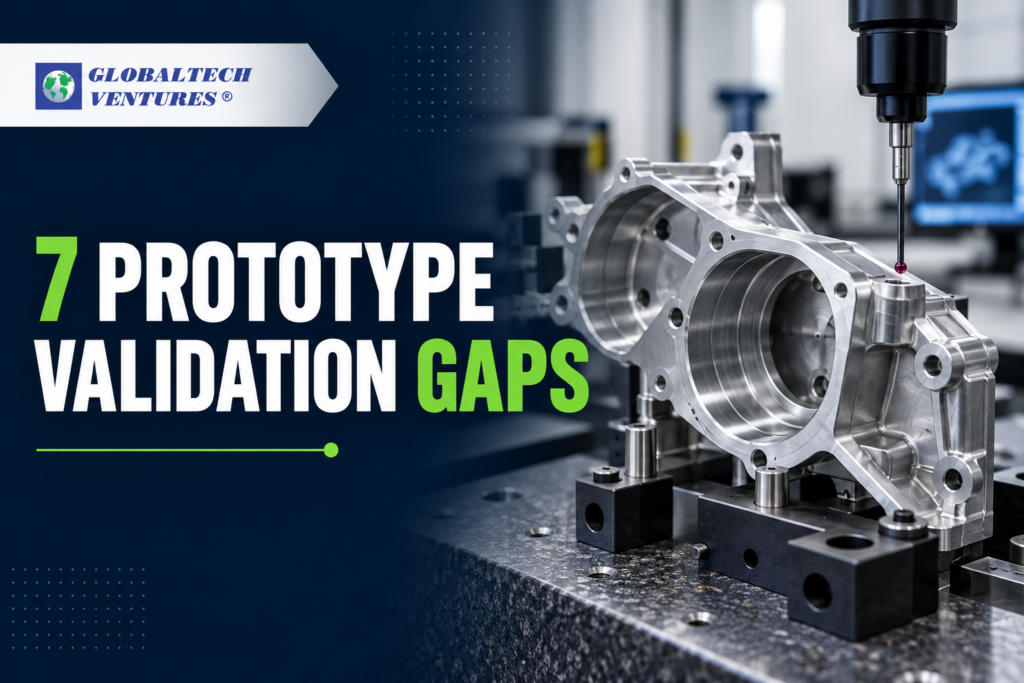
A prototype passes inspection. Tooling moves forward. Launch builds then reveal inconsistent fit, assembly delays, or unexpected material behavior.
The earlier build may have met its objective. An appearance model can support visual approval. A functional prototype can demonstrate performance under defined conditions. Neither result automatically establishes manufacturing readiness.
Global Technology Ventures Inc. (GTV) approaches prototyping within the broader Production Lifecycle. When planning prototyping services, start with the decision each prototype must support, then identify what remains unresolved.
These seven gaps help teams identify where they may need further investigation before committing to manufacturing.
Why can production problems appear after a prototype passes validation?
Prototype results apply to the configuration and conditions evaluated. Production can introduce material, process, or assembly variation outside that scope. Review those differences before using prototype approval to support a manufacturing commitment.
What should teams check before moving from prototypes to tooling?
Review unresolved material, manufacturing, dimensional, assembly, and inspection questions. Give priority to issues that could change tooling requirements. Decide what needs resolution before commitment and what can proceed with an agreed action plan.
1. Prototype Materials Do Not Represent Production Requirements
A substitute material may suit a visual model while leaving functional requirements unevaluated. Even the intended material can behave differently when processed another way.
Investigate next: Compare prototype materials and processing with production requirements. Identify which differences could affect performance and who will evaluate them. Substitution becomes a risk when its limitations disappear from later decisions.
2. The Prototype Process Hides Manufacturing Constraints
A prototype may contain features that are practical to produce individually but difficult through the planned production process. Tool access, wall thickness, and secondary operations may require further review.
Investigate next: Identify which features depend on the prototype method and what CNC machining or 3D printing actually tested. Determine whether the intended manufacturing route can reproduce the required geometry and finish.
3. Critical Dimensions Have Not Been Evaluated Together
Individual components can meet drawing tolerances while their combined variation prevents assembly. A successful prototype fit may depend on favorable dimensions.
Investigate next: Examine the relationships controlling fit, clearance, and alignment. Check whether permitted variation across mating components can create an unacceptable result. Component inspection alone may leave this interaction unresolved.
4. Manual Adjustments Make Assembly Appear Repeatable
Hand fitting, selective matching, or alignment adjustments can be appropriate during development. However, overlooking those interventions can conceal dependencies that complicate production.
Investigate next: Identify adjustments affecting fit or function. Determine whether they belong in a controlled assembly method or indicate a design issue. Include their implications for labor, consistency, and inspection.
5. Testing Does Not Reflect Relevant Operating Conditions
A room-temperature demonstration may satisfy a presentation objective while leaving thermal performance unevaluated. A brief functional test may leave repeated loading unresolved.
Investigate next: Compare completed evaluations with the conditions relevant to the next decision. Identify significant exclusions and assign follow-up responsibilities. Avoid extending approval beyond what the results support.
6. Inspection Criteria Are Incomplete or Inconsistent
Measurements can be difficult to interpret when teams use different datums, support conditions, or methods. Extensive inspection may also overlook the relationships controlling function.
Investigate next: Confirm critical characteristics, acceptance criteria, and suitable measurement methods. Agree on required records and revision references before fabrication. Resolve measurement disagreements before drawing conclusions about conformance.
7. No Plan Exists to Evaluate Manufacturing Repeatability
A successful build establishes a result under specific conditions. It does not demonstrate sustained performance across production variation.
Investigate next: Define what representative trials or low-volume builds should examine. Relevant factors may include material batches, setups, tooling, and assembly methods. Agree on acceptance requirements and responses to findings before increasing volume.
What to Resolve Before the Next Manufacturing Commitment
Prioritize gaps according to their effect on critical requirements, tooling decisions, assembly, and schedule.
Some questions require another build. Others may be resolved through drawing review, dimensional analysis, clearer specifications, or existing records.
For each significant issue, establish:
- The potential consequence of proceeding.
- The information needed.
- The responsible person or organization.
- The decision that depends on resolution.
As programs progress through the Production Lifecycle, evaluation activities, documentation, and approval responsibilities should remain clear. GTV’s involvement should reflect the agreed project scope.
Let’s Review Your Project Together
Bring current drawings or CAD models, the intended production process, available inspection and test findings, and known assembly adjustments.
Identify the next commitment and the questions that remain unresolved.
Let’s Review Your Project Together to discuss the next investigation and the support required.